LL-37 5 mg Research Material | Pure Lab Peptides Supply
Product Overview
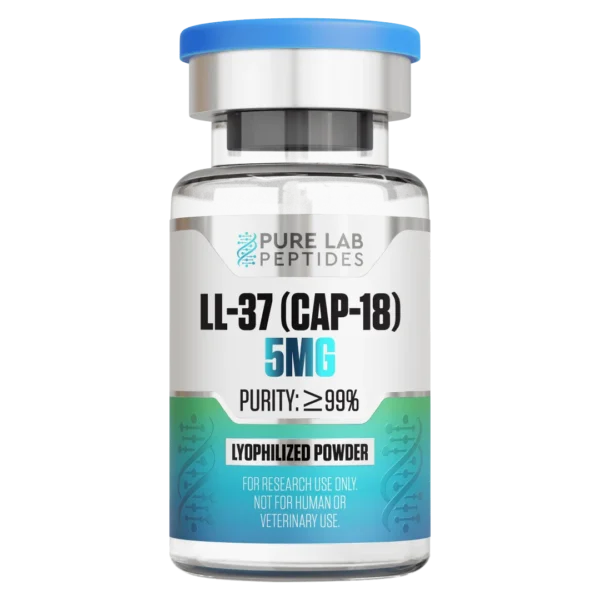
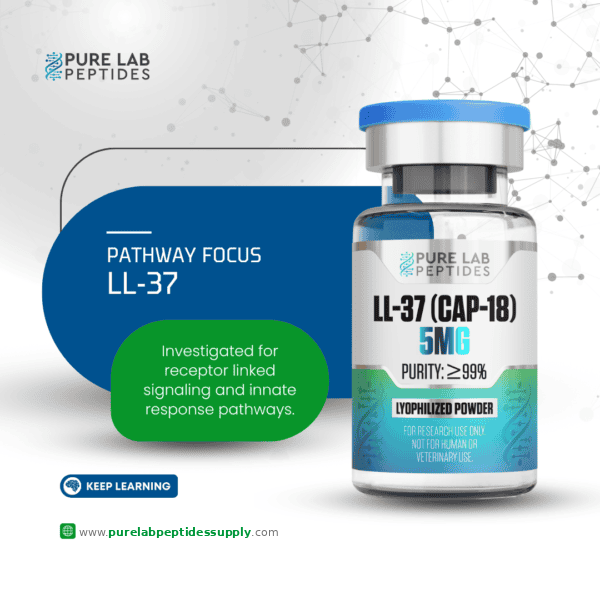
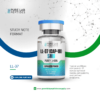
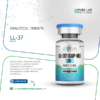
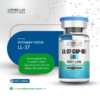
Explore LL-37 5 mg from Pure Lab Peptides Supply, supplied as lyophilized powder in one boxed 3 mL vial for laboratory research. LL-37 is a 37-amino-acid human cathelicidin peptide studied in host-defense research, antimicrobial assays, and membrane-interaction studies. It represents the mature peptide released from the larger hCAP-18 precursor.
For product information and available documentation, visit Pure Lab Peptides Supply. You can also review available batch reports through the COA and document page.
Product Information
- Product name: LL-37
- Labeled quantity: 5 mg
- Physical form: Lyophilized powder
- Packaging: One boxed 3 mL vial
- Peptide length: 37 amino acids
- Precursor: Human cathelicidin hCAP-18
- Research areas: Host defense, antimicrobial assays, and membrane interactions
- Intended use: Laboratory research only; not for human or veterinary use
Choose the Correct LL-37 Material
This listing describes mature LL-37 research material, not the full-length hCAP-18 precursor. Although the precursor and mature peptide are biologically related, they represent different molecular forms and support different research questions.
Therefore, researchers should compare the required sequence, terminal chemistry, and specified chemical form against the available product records. These details help distinguish the intended material from precursor proteins or modified peptide fragments.
The labeled 5 mg quantity and 3 mL vial capacity also describe different properties. The first indicates the stated material mass, while the second describes the container’s capacity. Neither figure establishes a solution concentration or experimental dose.
For reliable comparisons, document the preparation method and assay conditions alongside the labeled quantity. Equal material masses do not necessarily produce equivalent experimental results across different preparations or assay systems.
Scientific Background: What LL-37 Research Shows
Processing of hCAP-18 into LL-37
Sørensen and colleagues investigated how the hCAP-18 precursor becomes mature LL-37. In their study of human neutrophil material, they detected cleavage associated with exocytosis but did not detect the same processing within cells following phagocytosis.
Furthermore, among the three granule serine proteases examined, proteinase 3 accounted for the extracellular processing described in the study. These findings help explain a specific step in human cathelicidin biology.
However, this precursor-processing research does not mean that a supplied mature LL-37 preparation must undergo the same processing step. Likewise, the published study does not independently verify the composition or quality of a particular commercial batch.
Antimicrobial Activity Depends on Assay Conditions
Turner and colleagues compared LL-37 with other antimicrobial peptides using radial-diffusion and broth-microdilution assays. Their findings showed that susceptibility varied according to the organism and the conditions used in the experiments.
For example, some organisms remained susceptible under both tested salt conditions. By contrast, the examined methicillin-resistant Staphylococcus aureus, Proteus mirabilis, and Candida albicans showed susceptibility in low-salt media but resistance in media containing 100 mM NaCl.
The researchers also investigated membrane permeabilization and lipopolysaccharide binding in defined bacterial systems. Consequently, the organism, medium composition, salt concentration, and measured endpoint all matter when interpreting antimicrobial results.
A general antimicrobial classification therefore does not guarantee activity against every organism or under every experimental condition. Moreover, laboratory findings do not establish clinical treatment performance.
COA and Batch Documentation
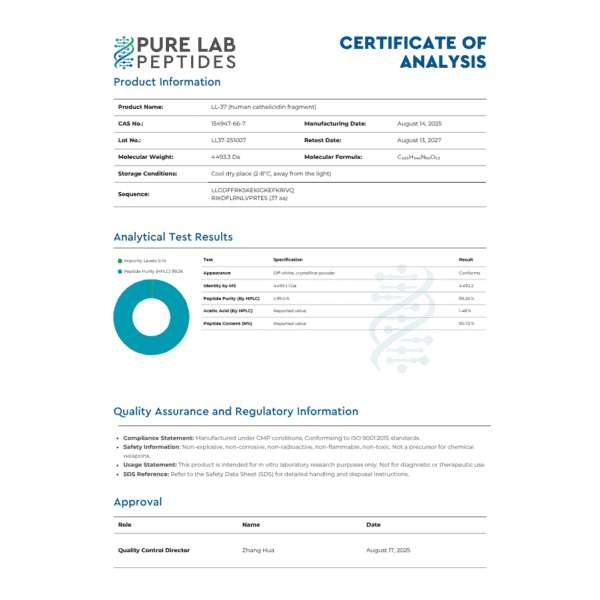
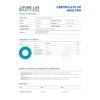
Before selecting research material, review the available records through the COA and document page. Match the product name and lot identifier, then check which analytical tests the corresponding report includes.
Identity, chromatographic purity, and measured content answer different questions. For instance, a purity result alone does not establish the total quantity of peptide in a vial or its biological activity. Similarly, published studies on LL-37 cannot independently certify a specific commercial lot.
For additional product information, visit Pure Lab Peptides Supply.
Packaging and Research Considerations
LL-37 5 mg is supplied as lyophilized powder in one boxed 3 mL vial, rather than as a prepared solution or medical formulation. The vial capacity does not specify a solvent volume or reconstitution procedure.
Researchers should therefore consult the applicable product records and follow laboratory procedures for handling, storage, and analysis. In addition, evaluate assay-specific requirements separately from the labeled purchase quantity.
This product is intended for laboratory research only and is not intended for human or veterinary use.
Frequently Asked Questions
What is LL-37?
LL-37 is a 37-amino-acid human cathelicidin peptide. Researchers study it in host-defense, antimicrobial, and membrane-interaction models.
How does LL-37 differ from hCAP-18?
hCAP-18 is the larger precursor protein, while LL-37 is the mature peptide produced through precursor processing. Therefore, the two forms should not be treated as interchangeable research materials.
What does LL-37 5 mg mean?
LL-37 identifies the peptide, and 5 mg indicates the labeled quantity of material. Neither specification establishes a solution concentration or experimental dose.
Does LL-37 show the same antimicrobial activity in every assay?
No. Published research demonstrates that results can vary with the organism, medium composition, salt concentration, and assay method. Researchers should evaluate findings within the conditions actually tested.
Where can I review available batch documentation?
Visit the COA and document page to review available product files and batch reports. Always match the report’s product and lot information to the material being evaluated.
Research Documentation and Product Review
LL-37 provides a defined mature peptide identity for laboratory studies involving host defense, antimicrobial activity, and membrane interactions. However, researchers should distinguish published findings from batch-specific analytical results and account for experimental conditions when comparing data.
To review product information and available documentation, visit Pure Lab Peptides Supply and the COA and document page.