Description
L-Carnitine 200 mg | Pure Lab Peptides Supply
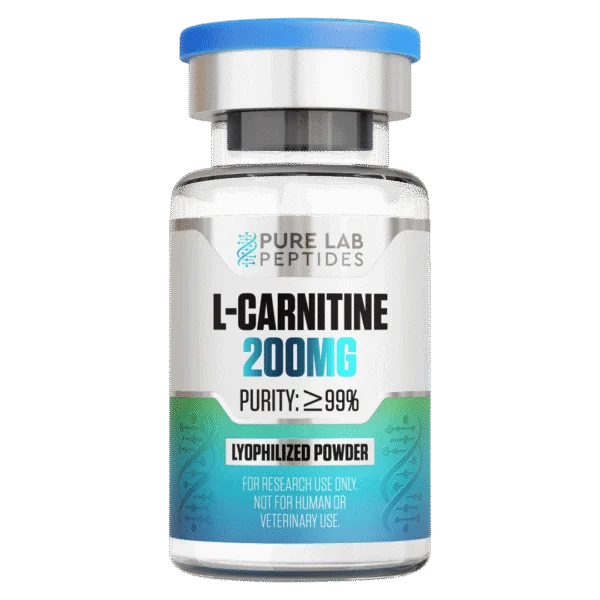
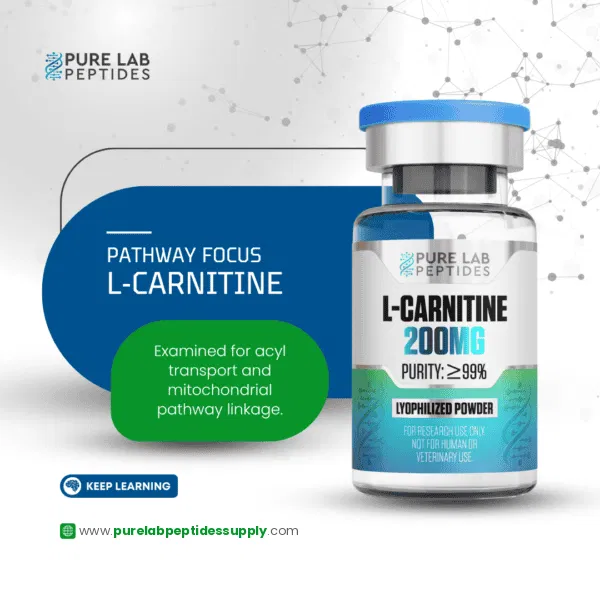
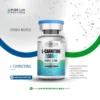
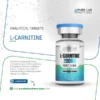
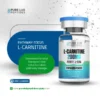
Buy L-Carnitine from Pure Lab Peptides Supply, supplied as lyophilized powder in one vial containing 200 mg of labeled research material. This presentation provides a clearly identified quantity for laboratory research and analytical reference.
L-Carnitine is a naturally occurring quaternary ammonium compound involved in cellular fatty-acid transport. Researchers study its molecular structure, chemical properties, and role in carnitine-related biochemical pathways. Unlike peptides, L-Carnitine is a small-molecule compound rather than an amino-acid chain.
Moreover, its defined chemical identity makes it suitable for analytical investigations involving compound characterization and reference comparisons. The 200 mg label identifies the stated dry material mass. It does not represent a concentration, prepared solution, or measured biological activity.
Product Overview
Pure Lab Peptides Supply provides L-Carnitine in a 200 mg lyophilized presentation. This format supports consistent product identification and laboratory inventory management.
- Product: L-Carnitine
- Labeled quantity: 200 mg
- Presentation: One vial
- Physical format: Lyophilized powder
- Compound class: Quaternary ammonium compound
- Molecular category: Small molecule
- Research classification: Biochemical and analytical research material
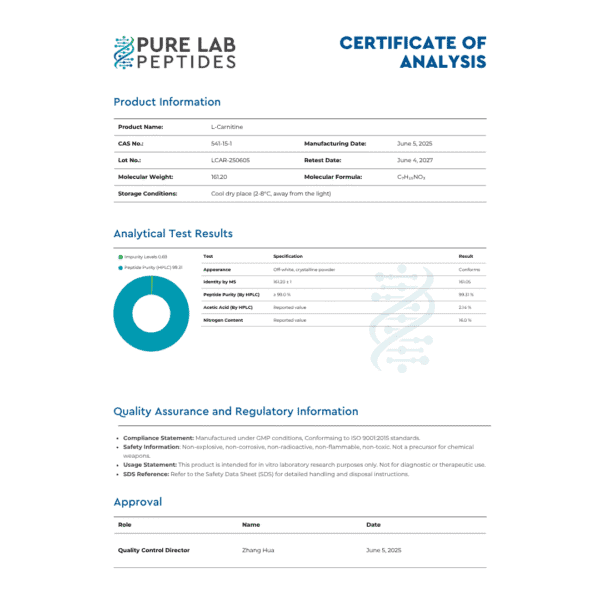
- Documentation: Product-specific documentation and applicable COA records
Product Information
L-Carnitine, also known as levocarnitine in its L-form, has an established role in cellular metabolism. Its molecular structure allows it to participate in the transport of long-chain fatty-acid groups across the mitochondrial membrane through the carnitine shuttle system.
In addition, researchers examine L-Carnitine when investigating metabolic pathways, molecular interactions, and biochemical transport mechanisms. Its chemical identity distinguishes it from peptide-based research compounds.
The 200 mg presentation identifies the labeled amount of dry material in the vial. However, it does not establish a solution concentration or confirm the quantity of any prepared sample.
Molecular Characteristics
L-Carnitine is a small molecule rather than a peptide. Therefore, its molecular description uses chemical identifiers instead of an amino-acid sequence.
Common reference specifications for L-carnitine in its free-base form include:
- Chemical name: L-Carnitine
- CAS number: 541-15-1
- Molecular formula: C₇H₁₅NO₃
- Molecular weight: 161.20 g/mol
- Chemical classification: Quaternary ammonium compound
- Stereochemistry: L-form
Importantly, L-Carnitine can exist in different chemical forms, including salts such as L-carnitine tartrate. These forms have different molecular specifications. Consequently, researchers should confirm the exact form supplied through the applicable product documentation rather than assume that every L-Carnitine preparation has the same formula or molecular weight.
Understanding L-Carnitine in Biochemical Research
Researchers frequently examine L-Carnitine in connection with fatty-acid transport and mitochondrial metabolism. The compound participates in the carnitine shuttle, which helps transport long-chain fatty-acid groups into mitochondria for further metabolic processing.
Furthermore, its zwitterionic structure and defined stereochemistry provide useful characteristics for analytical identification. Researchers can examine these properties when studying compound identity, chemical behavior, and related biochemical pathways.
L-Carnitine is not a peptide, protein, or amino-acid sequence. For this reason, peptide-specific specifications such as sequence length and peptide synthesis method do not apply.
Why Choose the L-Carnitine 200 mg Presentation?
The 200 mg presentation provides a clearly labeled quantity in a single vial. It also supports straightforward product identification and research inventory organization.
Additionally, the lyophilized format provides a dry presentation for appropriate laboratory storage and handling. Researchers should consult the applicable product documentation for material-specific handling conditions.
Each product record should remain linked to its corresponding documentation. This approach helps maintain traceability and supports accurate laboratory recordkeeping.
Quality Documentation and COA
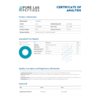
Pure Lab Peptides Supply provides a dedicated documentation page for accessing available Certificates of Analysis and related product records.
A COA can provide batch-specific information when the corresponding record is available. Depending on the documentation, this may include analytical identification, reported purity, and other quality measurements.
For accurate evaluation, researchers should match the documentation to the relevant product and batch. Do not assume that a general product description establishes a batch-specific analytical result.
Discreet Delivery with Pure Lab Peptides Supply
Pure Lab Peptides Supply prioritizes secure handling and customer privacy throughout the shipping process.
Eligible orders use discreet, non-branded packaging designed to protect shipment privacy. Packaging is odor-proof and tamper-resistant, while tracking information helps customers monitor delivery progress.
Furthermore, the discreet shipping process supports a professional purchasing experience from dispatch through delivery.
Storage and Handling
Store L-Carnitine according to the conditions stated in its product documentation. Because storage requirements can vary with the chemical form and formulation, follow the applicable manufacturer guidance.
Keep the vial properly identified and protected from unsuitable environmental conditions. In addition, maintain appropriate laboratory records for storage, handling, and sample identification.
Researchers should consult the product-specific documentation before selecting any preparation or handling procedure.
Frequently Asked Questions
What is L-Carnitine?
L-Carnitine is a naturally occurring quaternary ammonium compound involved in cellular fatty-acid transport. Researchers examine its chemical characteristics and role in metabolic pathways.
Is L-Carnitine a peptide?
No. L-Carnitine is a small-molecule compound, not a peptide. Therefore, it does not have an amino-acid sequence or peptide chain length.
How much L-Carnitine does this vial contain?
This presentation is labeled as 200 mg per vial. The stated amount refers to the labeled dry material mass, not a solution concentration.
What is the molecular formula of L-Carnitine?
The commonly referenced free-base L-carnitine form has the molecular formula C₇H₁₅NO₃ and a molecular weight of approximately 161.20 g/mol. Salt forms have different specifications.
Does the product include a Certificate of Analysis?
Available product documentation can be accessed through the Pure Lab Peptides Supply COA page. Researchers should check the applicable record for batch-specific information.
Is L-Carnitine supplied as a liquid?
No. This listing identifies a lyophilized powder presentation containing 200 mg of labeled material per vial.
Order L-Carnitine 200 mg
Explore the L-Carnitine 200 mg presentation from Pure Lab Peptides Supply. Review the available product documentation and applicable COA records to support accurate material identification and laboratory recordkeeping.