KPV 10 mg Research Material | Pure Lab Peptides Supply
Product Overview
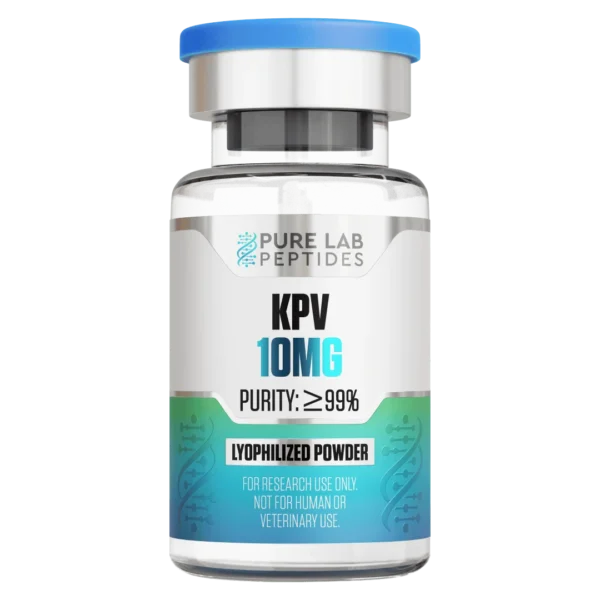
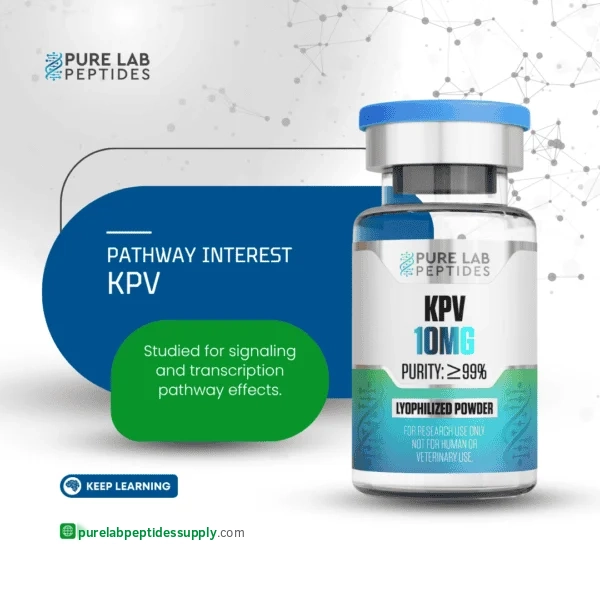
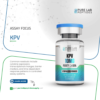
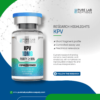
Explore KPV 10 mg from Pure Lab Peptides Supply, supplied as lyophilized powder in one boxed 3 mL vial for laboratory research. KPV is the tripeptide lysine-proline-valine, corresponding to the C-terminal three-amino-acid sequence of alpha-melanocyte-stimulating hormone (alpha-MSH).
Researchers investigate KPV in peptide transport and inflammatory-signaling models. For additional product information, visit Pure Lab Peptides Supply. You can also review available batch records through the COA and document page.
Product Information
- Product name: KPV
- Labeled quantity: 10 mg
- Physical form: Lyophilized powder
- Packaging: One boxed 3 mL vial
- Peptide sequence: Lysine-proline-valine (KPV)
- Peptide length: Three amino acids
- Research areas: Peptide transport and inflammatory signaling
- Intended use: Laboratory research only; not for human or veterinary use
Choose the Correct KPV Material
This 10 mg presentation contains single-compound KPV. It differs from full-length alpha-MSH and from combination products such as KLOW and Tri-Heal, which contain additional ingredients. Therefore, researchers should compare individual compound amounts when an experimental method requires KPV alone.
The labeled 10 mg describes the stated material quantity, not its concentration or an experimental dose. In addition, the three-letter sequence identifies the amino-acid residues but does not independently establish every aspect of the supplied material’s chemical form.
Before comparing research materials, check the product documentation for the applicable identity, terminal chemistry, and salt-form information. These details can affect whether a material matches a particular analytical method or experimental design.
KPV Uptake and Inflammatory Signaling
Intestinal Epithelial and Immune-Cell Models
Dalmasso and colleagues investigated KPV in intestinal epithelial cell lines and Jurkat T cells. They combined uptake experiments with NF-kappaB reporter assays, protein measurements, and cytokine analyses.
Their findings linked the PepT1 di- and tripeptide transporter to cellular KPV uptake. The researchers also reported reduced activation of selected NF-kappaB and MAP kinase signaling pathways under the conditions they tested.
Furthermore, the study included two chemically induced mouse-colitis models. These experiments examined different levels of biological response, from cellular transport and signaling to tissue-level outcomes. However, findings from cell and animal models do not establish a human treatment effect or a dosing schedule for this research material.
Mechanism Depends on the Cell System
In a separate study, Land examined KPV and gamma-MSH in immortalized human bronchial epithelial cells. The researchers reported that KPV reduced nuclear entry of the NF-kappaB component p65RelA. By comparison, gamma-MSH produced a response that required the melanocortin-3 receptor, or MC3R, in that model.
The investigation also measured reporter activity and inflammatory signaling, including IL-8 and eotaxin secretion. These findings illustrate why a relationship to melanocortin peptides does not necessarily mean that different peptides share the same receptor dependence or signaling mechanism.
Consequently, researchers should record the cell type, stimulus, uptake conditions, and measured endpoint when evaluating KPV-related experiments. The reported findings describe the specific models and conditions studied, rather than guaranteeing an identical response in other systems.
COA and Batch Documentation
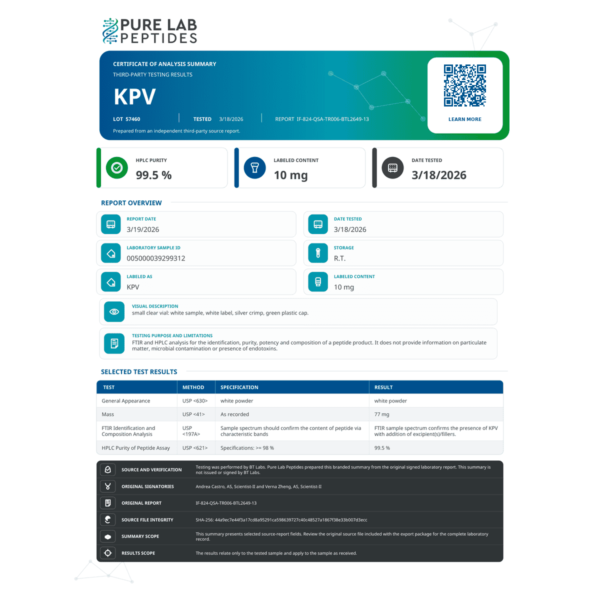
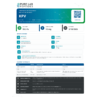
Before selecting research material, review the available reports through the COA and document page. Match the product name and lot number, then examine which tests the relevant report includes.
Identity, chromatographic purity, and measured content represent separate analytical results. For example, a purity result alone does not establish the total quantity of peptide in a vial or its biological activity. Likewise, published studies on KPV do not independently verify the characteristics of a specific commercial batch.
For more product information, visit Pure Lab Peptides Supply.
Packaging and Research Considerations
This product is supplied as lyophilized powder rather than a prepared solution or medical formulation. The 3 mL figure describes the vial’s capacity; it does not specify a solvent volume or reconstitution procedure.
Researchers should therefore follow the handling, storage, and analytical procedures appropriate to the supplied material and their laboratory protocols. In addition, consult the available product documentation when verifying batch-specific details or evaluating suitability for a particular assay.
KPV 10 mg is intended for laboratory research only and is not intended for human or veterinary use.
Frequently Asked Questions
What is KPV?
KPV is a tripeptide consisting of lysine, proline, and valine. Researchers study it in peptide transport and inflammatory-signaling models, including investigations of NF-kappaB-related pathways.
What does KPV 10 mg mean?
KPV identifies the three-amino-acid peptide, while 10 mg indicates the labeled quantity of material. Neither specification represents a concentration or experimental dose.
How does KPV differ from KLOW and Tri-Heal?
The 10 mg KPV product is a single-compound presentation. By contrast, KLOW and Tri-Heal are combination products whose total labeled mass includes additional ingredients. Check each product’s composition when comparing research materials.
Is KPV supplied as a liquid?
No. This product is described as lyophilized powder in one boxed 3 mL vial. The vial capacity does not indicate a prepared liquid volume.
Where can I find the available batch reports?
Visit the COA and document page to review available reports and product files. Always match the report’s product and lot identifiers to the material under evaluation.
Research Documentation and Product Review
KPV offers a defined tripeptide identity for laboratory studies involving peptide transport and inflammatory signaling. However, researchers should distinguish published findings from batch-specific analytical results and evaluate each material against the requirements of their methods.
To review product information and available documentation, visit Pure Lab Peptides Supply and the COA and document page.