

GLP3-R 20 mg (Retatrutide) Research Material | Pure Lab Peptides Supply
Product Overview
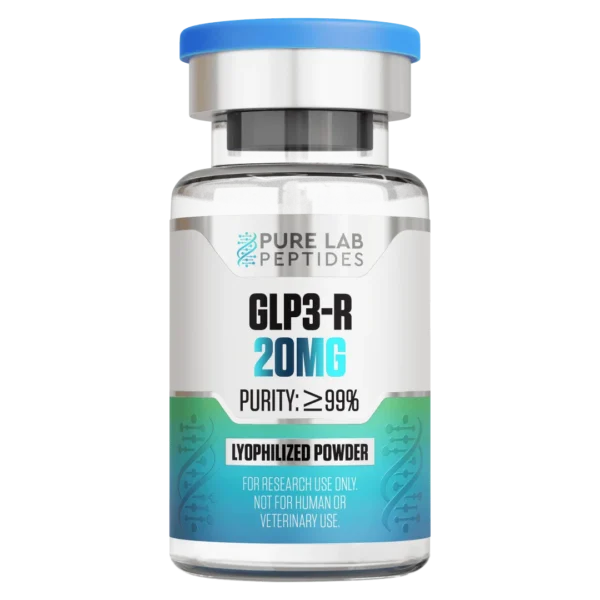
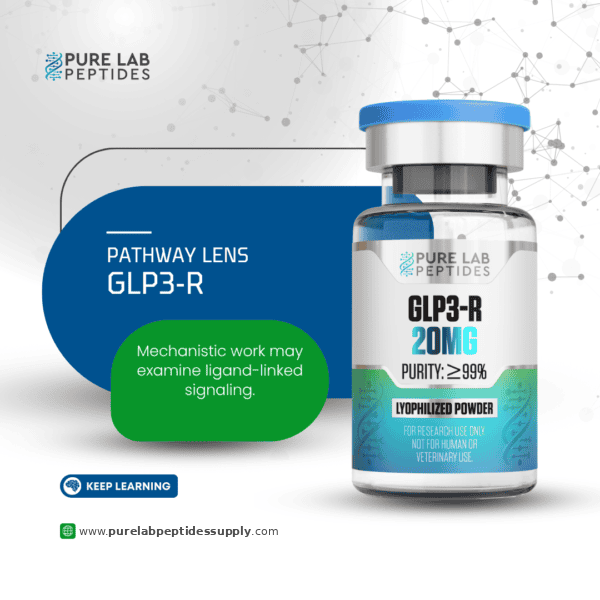
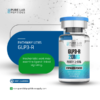
GLP3-R 20 mg, listed in this catalog as retatrutide, is a research material supplied as lyophilized powder in one boxed 3 mL vial. Visit Pure Lab Peptides Supply for supplier information and product documentation.
Retatrutide is an investigational peptide studied for its activity at three receptor systems: glucagon, glucose-dependent insulinotropic polypeptide (GIP), and glucagon-like peptide-1 (GLP-1). Its receptor profile makes it relevant to scientific investigations of metabolic signaling and peptide pharmacology.
The GLP3-R designation is a catalog label rather than a standalone chemical identity. Researchers should compare the documented identity, chemical form, and analytical records before determining whether a material matches their research requirements.
GLP3-R 20 mg Product Information
- Catalog name: GLP3-R 20 mg
- Scientific name listed: Retatrutide
- Material category: Research peptide
- Labeled quantity: 20 mg
- Physical presentation: Lyophilized powder
- Packaging: One boxed vial
- Vial capacity: 3 mL
- Research area: Metabolic signaling and peptide pharmacology
The 20 mg label identifies the stated material quantity, whereas 3 mL describes the vial’s capacity. Neither measurement establishes a solution volume or concentration.
Product identity should be assessed using the applicable documentation rather than the catalog name alone. Likewise, the labeled quantity does not establish purity, receptor activity, or suitability for a particular laboratory method.
Compare Available GLP3-R Vial Sizes
The GLP3-R catalog family includes different labeled quantities. The listed presentations include 5 mg, 10 mg, 20 mg, and 30 mg options.
Researchers comparing these listings should review the product specifications and available batch records for the exact presentation under consideration. A different labeled quantity does not independently establish a different chemical form, greater purity, or stronger biological activity.
GLP3-R is also distinct from other catalog designations, including GLP1-S and GLP2-T. Catalog labels should not be treated as standardized potency rankings or evidence that equal masses of different compounds are interchangeable.
Retatrutide and Three-Receptor Signaling Research
Glucagon, GIP, and GLP-1 Receptor Activity
Retatrutide, also identified in scientific literature as LY3437943, has been investigated as a peptide agonist targeting three receptor systems: the glucagon receptor, GIP receptor, and GLP-1 receptor.
In the discovery research by Coskun and colleagues, investigators characterized retatrutide’s activity across these receptor systems using laboratory experiments. The measured responses differed between receptors, highlighting the importance of evaluating each target separately.
The term triple agonist describes the peptide’s activity profile across three receptor systems. It does not mean that the vial contains three separate active ingredients.
Interpreting Published Research
Published receptor studies provide scientific context for understanding retatrutide’s molecular properties. However, results obtained under specific experimental conditions do not independently verify the identity, purity, measured content, or performance of a commercial product lot.
When reviewing research findings, distinguish receptor activity from chromatographic purity and measured material content. These are separate analytical questions and require appropriate supporting evidence.
Chemical Identity and Product Specifications
Catalog names help organize product listings, but they do not replace chemical identification. When comparing GLP3-R 20 mg with a reference compound, review the available information concerning peptide identity, sequence, chemical form, and any relevant modifications.
Do not infer an unreported counterion, complete formulation, or analytical result from a product name alone. Similarly, published findings about retatrutide do not establish that a particular commercial sample is equivalent to the material used in a research study.
Accurate comparisons depend on documented specifications and appropriately matched analytical records.
GLP3-R 20 mg COA and Batch Documentation
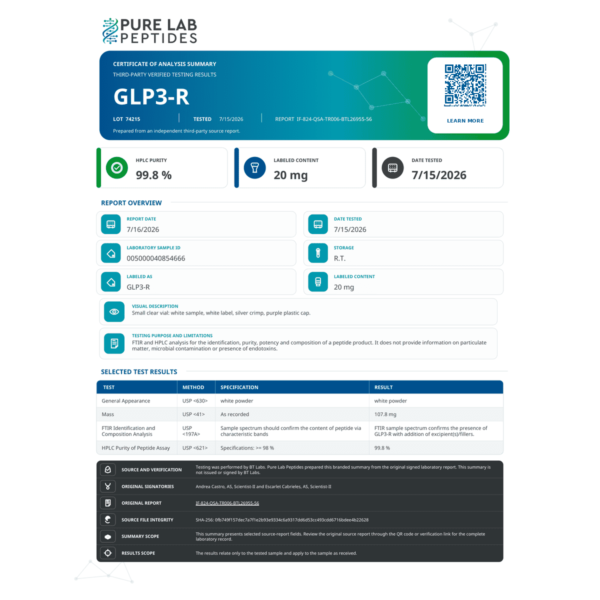
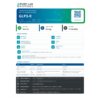
Visit the Pure Lab Peptides Supply COA and document page to review available documentation.
When evaluating a certificate of analysis (COA), confirm that the report matches the product and lot under consideration. Where available, examine the following:
- Identity testing: Evidence used to assess whether the material matches the specified compound.
- Chromatographic purity: The reported distribution of detected components under the stated analytical method.
- Measured content: The reported quantity of the target material, where available.
- Batch identification: The lot information connecting the report to the specific product.
- Analytical methods: The procedures used to produce the reported results.
These details answer different questions. For example, chromatographic purity alone does not establish the exact amount of material in a vial, receptor activity, sterility, or suitability for a particular experiment.
A general documentation page is a starting point for review. Verify the individual report and matching lot before drawing conclusions about the supplied material.
Storage and Handling Information
Use the applicable product documentation and laboratory procedures to assess storage, handling, and material integrity. Do not infer shelf life, stability, or preparation requirements from the vial capacity or from published studies involving other preparations.
The 20 mg labeled quantity and 3 mL vial capacity describe different product characteristics. Neither establishes a liquid concentration or provides preparation instructions.
Frequently Asked Questions About GLP3-R 20 mg
What is GLP3-R 20 mg?
GLP3-R 20 mg is a catalog-listed research material identified in this product description as retatrutide. It is supplied as lyophilized powder in a boxed 3 mL vial.
What is retatrutide?
Retatrutide is an investigational peptide studied for its activity at glucagon, GIP, and GLP-1 receptors. Research has examined its receptor activity and potential relevance to metabolic signaling.
What does triple agonist mean?
Triple agonist describes a compound that activates three receptor systems. In retatrutide research, these are the glucagon, GIP, and GLP-1 receptors. The term describes the peptide’s receptor profile, not a mixture of three compounds.
Does a 3 mL vial contain 3 mL of solution?
Not necessarily. The 3 mL measurement describes the container’s capacity, not the volume of liquid supplied. The 20 mg label does not establish a solution concentration.
What should I check in a retatrutide COA?
Review the documented identity, batch number, analytical methods, chromatographic purity, and measured content where available. Confirm that the report corresponds to the specific product lot being evaluated.
Does a higher GLP3-R quantity mean greater potency?
No. A larger labeled quantity indicates more stated material, not necessarily greater potency, purity, or receptor activity. These properties require separate evidence.
Where can I find GLP3-R product documentation?
Visit Pure Lab Peptides Supply for supplier information and the COA and document page to review available analytical records. Match each report to the relevant product and lot.
Research Documentation and Product Review
GLP3-R 20 mg is listed as a retatrutide research material supplied in lyophilized powder form. Its catalog designation, labeled quantity, and vial capacity describe the product presentation, while identity and quality assessments depend on supporting analytical evidence.
Explore Pure Lab Peptides Supply for supplier information and consult the available COA documentation when reviewing product records.
Research-use statement: This description provides scientific and material-identification information. It does not establish suitability for human or veterinary use, diagnose or treat a medical condition, or guarantee a particular experimental outcome.