Gonadorelin 2 mg Research Peptide | Pure Lab Peptides Supply
Product Overview
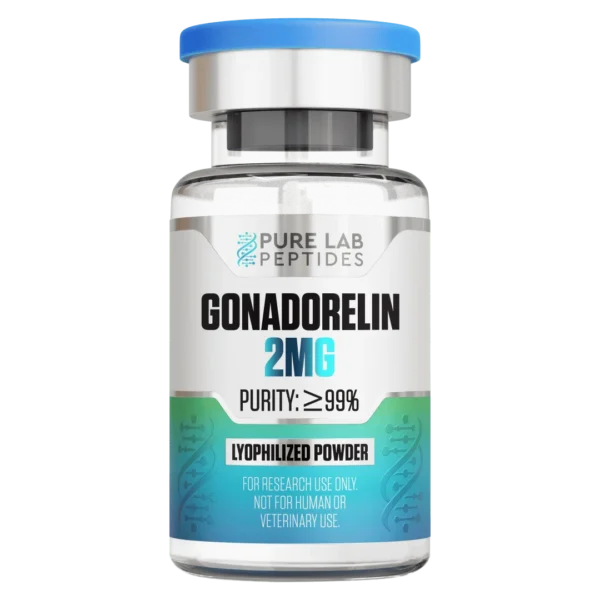
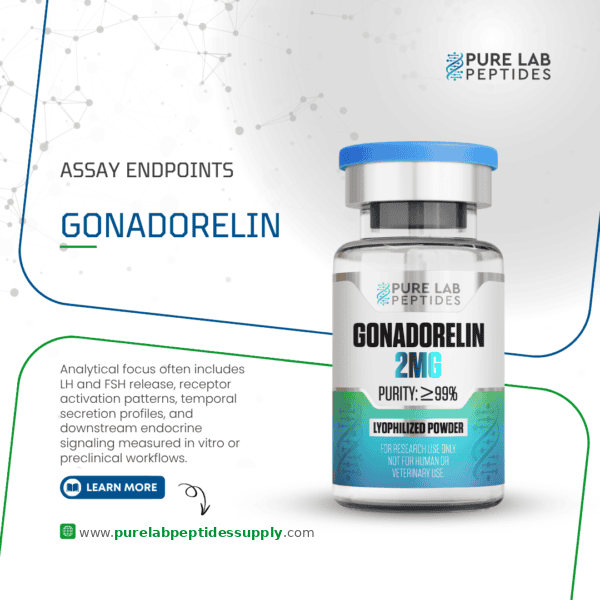
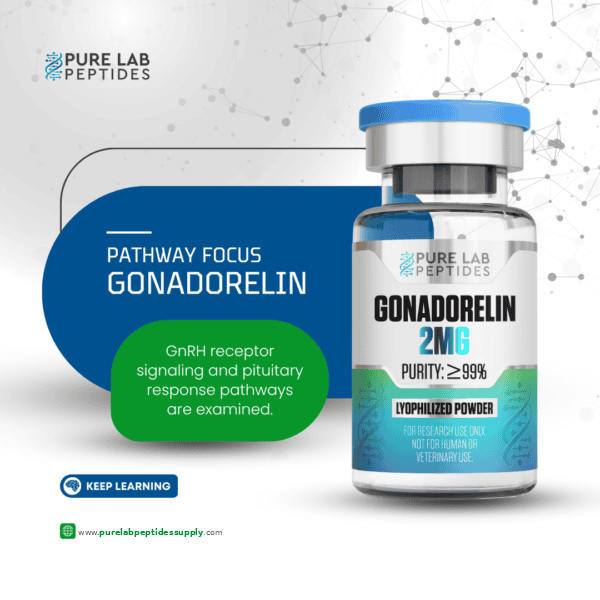
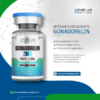
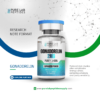
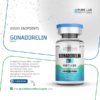
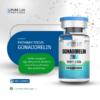
Buy Gonadorelin 2 mg research peptide from Pure Lab Peptides Supply. This synthetic gonadotropin-releasing hormone (GnRH) peptide is supplied as lyophilized powder in one boxed 3 mL vial for laboratory research applications.
Gonadorelin is a decapeptide composed of ten amino acid residues. Its defined molecular structure makes it relevant to laboratory investigations involving peptide characterization, pituitary signaling, and gonadotropin regulation.
Researchers can review the product specifications and available batch documentation to assess whether the material meets their analytical requirements.
Gonadorelin 2 mg Product Information
- Product name: Gonadorelin 2 mg
- Material type: Synthetic GnRH research peptide
- Labeled quantity: 2 mg
- Physical form: Lyophilized powder
- Packaging: One boxed vial
- Vial capacity: 3 mL
- Research applications: Peptide characterization and GnRH signaling research
The 2 mg label indicates the stated mass of the material, while 3 mL describes the vial’s capacity. Neither measurement establishes a solution concentration. This product is supplied as a research material rather than a prepared clinical formulation or sublingual tablet.
When comparing peptide materials, review the documented amino acid sequence, terminal modifications, and chemical form. Modified GnRH agonists and antagonists are distinct constructs, so a similar product name alone does not establish molecular equivalence.
Gonadorelin Structure and Molecular Characteristics
Gonadorelin is the synthetic form of gonadotropin-releasing hormone. Its reference structure contains ten amino acid residues, including a pyroglutamyl N-terminus and an amidated C-terminus.
These structural characteristics are important when comparing reference peptides and investigating structure-activity relationships. Therefore, researchers should use documented molecular characteristics rather than relying exclusively on product names.
Foundational research by Burgus and colleagues contributed to the characterization of luteinizing hormone-releasing factor through peptide sequencing, enzymatic cleavage, and mass spectrometry. Synthetic material was also examined to establish the peptide’s structure and reported biological activities.
However, published findings about a reference compound do not independently establish the identity, purity, or performance of a commercially supplied batch.
Gonadorelin and GnRH Signaling Research
Reference Peptide Identification
Research into gonadotropin-releasing hormone provides a foundation for investigating peptide structure and pituitary signaling. By examining molecular characteristics and comparing reference materials, researchers can investigate how specific structural features relate to observed experimental properties.
For reliable interpretation, distinguish published findings about the reference molecule from analytical results obtained for an individual product lot.
Pulsatile and Continuous GnRH Exposure
Haisenleder and colleagues investigated the effects of pulsatile and continuous GnRH exposure on gonadotropin-subunit gene transcription in a controlled rat model.
Their research highlights the importance of exposure patterns and measurement endpoints when interpreting signaling experiments. Gene transcription, messenger RNA levels, and hormone release represent different biological measurements and should not be treated as interchangeable.
These findings provide scientific context for GnRH research, but they do not demonstrate clinical benefits or guarantee a particular outcome from this product.
Gonadorelin COA and Batch Documentation
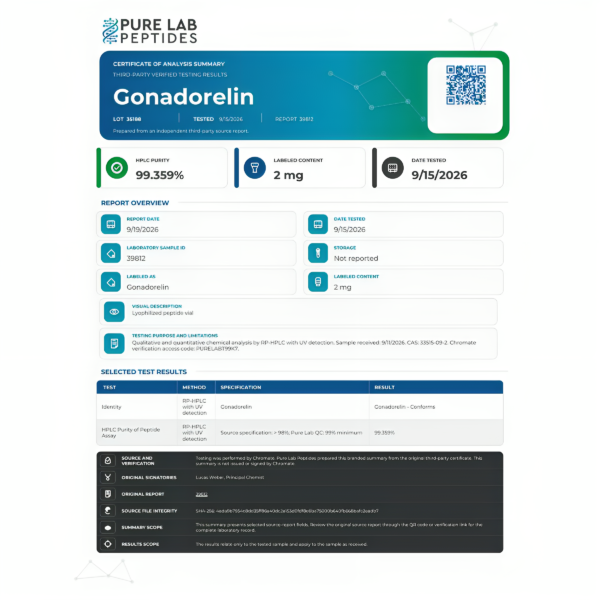
Access the Pure Lab Peptides Supply COA document page to review the available certificate of analysis documentation.
When evaluating a certificate of analysis (COA), confirm that the document corresponds to the specific product and batch under consideration. Where reported, review the following analytical details:
- Identity testing: Evidence used to assess whether the material matches the specified compound.
- Chromatographic purity: The proportion of detected components under the stated analytical method.
- Measured content: The reported amount of the target compound, where available.
- Batch identification: The lot number linking the report to the supplied material.
- Analytical methods: The procedures used to generate the reported results.
These measurements address different quality questions. For example, chromatographic purity alone does not establish the exact amount of active material, sterility, or suitability for a particular experiment.
A general COA webpage is a starting point for reviewing documentation. Always verify the individual report and its batch details before drawing conclusions about a specific vial.
Storage and Handling Information
Follow the applicable supplier documentation for storage, handling, and material integrity. Do not infer shelf life, stability, solubility, or reconstitution requirements from the vial capacity or from published studies involving other gonadorelin preparations.
Experimental suitability depends on the research method, analytical requirements, and material-specific documentation. Review these details before deciding whether the product meets your laboratory’s requirements.
Frequently Asked Questions About Gonadorelin 2 mg
What is Gonadorelin 2 mg?
Gonadorelin 2 mg is a synthetic gonadotropin-releasing hormone peptide supplied as lyophilized powder in a boxed 3 mL vial for research-related applications.
What does lyophilized Gonadorelin mean?
Lyophilization is a freeze-drying process that removes water under controlled conditions. It describes the material’s physical presentation but does not independently establish stability, shelf life, or storage requirements.
Is Gonadorelin the same as GnRH?
Gonadorelin is the synthetic form of gonadotropin-releasing hormone (GnRH). The terms are closely related, although the documented molecular characteristics of a particular material should still be verified.
What should I check in a Gonadorelin COA?
Review the product identity, batch number, analytical methods, chromatographic purity, and measured content where available. Confirm that the document matches the specific product lot rather than relying on a general certificate or unrelated report.
Does a 3 mL vial contain 3 mL of solution?
Not necessarily. The 3 mL measurement refers to the vial’s capacity, not necessarily the amount of liquid inside. The stated 2 mg quantity does not establish a solution concentration.
What is the difference between Gonadorelin and modified GnRH peptides?
Modified GnRH agonists and antagonists may contain structural changes that affect their biological properties. Researchers should compare the documented molecular structures and chemical forms before treating different peptides as equivalent.
Where can I find Gonadorelin product documentation?
Visit Pure Lab Peptides Supply for the supplier website and review the COA document page for available analytical documentation. Verify the relevant product and batch before interpreting any certificate.
Research Documentation and Product Review
Gonadorelin 2 mg provides a defined peptide reference for research involving GnRH structure and signaling. Review the product specifications, available batch documentation, and applicable handling requirements to determine whether the material meets your laboratory’s criteria.
Explore Pure Lab Peptides Supply for supplier information, and consult the COA documentation page when reviewing available analytical records.
Research-use statement: This description provides scientific and material-identification information. It does not establish suitability for human or veterinary use, diagnose or treat a medical condition, or guarantee a specific experimental outcome.