Description
Glutathione 600 mg | Pure Lab Peptides Supply
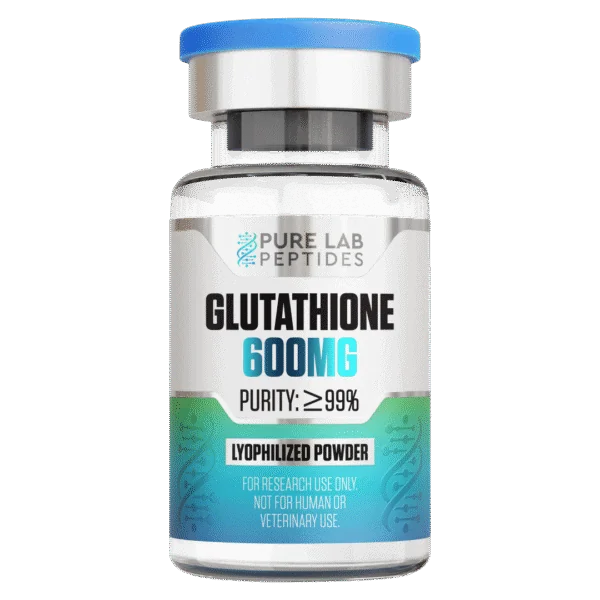
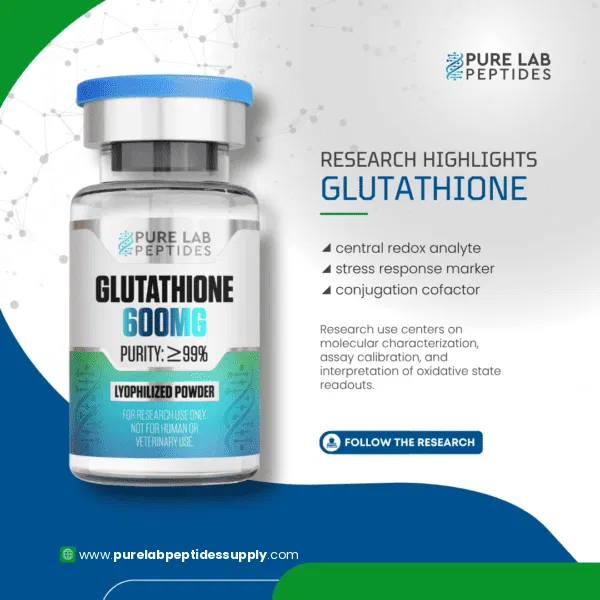
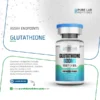
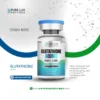
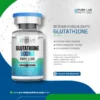
Buy Glutathione 600 mg from Pure Lab Peptides Supply, supplied as lyophilized powder in one vial containing 600 mg of labeled research material. Glutathione is a naturally occurring tripeptide composed of glutamic acid, cysteine, and glycine. It is widely studied for its role in cellular redox chemistry and biochemical processes.
Product Overview
Glutathione, commonly abbreviated as GSH in its reduced form, contains three amino acid residues connected through peptide bonds. Unlike many longer research peptides, its molecular structure consists of a compact sequence with a distinctive gamma-glutamyl linkage.
Furthermore, glutathione contains a sulfur-bearing cysteine residue. This feature contributes to its important chemical properties and makes it a useful subject in studies involving oxidation-reduction reactions.
Researchers also examine the relationship between reduced glutathione (GSH) and oxidized glutathione (GSSG). These two forms represent different chemical states of the same glutathione system. Therefore, identifying the exact form is important when comparing analytical results or documenting research materials.
Product Information
| Specification | Details |
|---|---|
| Product name | Glutathione |
| Labeled quantity | 600 mg |
| Presentation | One vial |
| Physical format | Lyophilized powder |
| Compound class | Tripeptide |
| Reference sequence length | 3 amino acids |
| Amino acid composition | Glutamic acid, cysteine, glycine |
| Common abbreviation | GSH (reduced form) |
| N-terminal modification | No additional modification indicated for the reference structure |
| Product type | Research material |
| Intended application | Laboratory research and analytical reference |
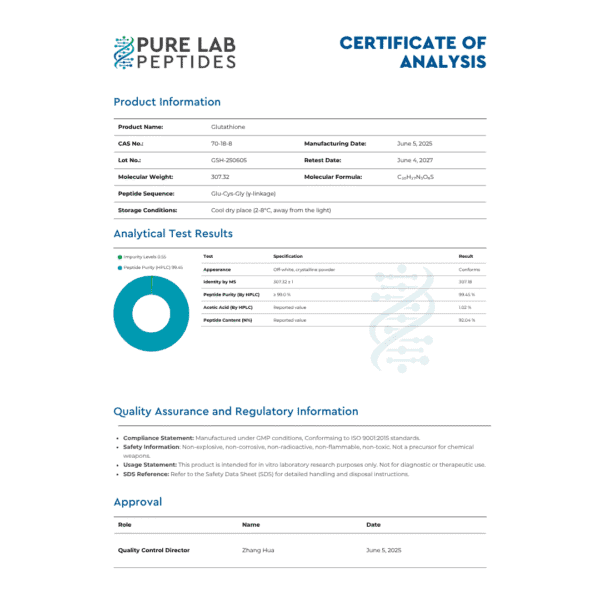
| Documentation | Certificate of Analysis (COA) |
Molecular Characteristics
The commonly referenced reduced form of glutathione is L-γ-glutamyl-L-cysteinylglycine. Its structure contains a gamma-peptide linkage between glutamate and cysteine, followed by a conventional peptide linkage to glycine.
The following specifications describe the reduced form. However, glutathione also exists in an oxidized form with different molecular characteristics. Confirm the exact chemical form against the applicable product documentation.
| Molecular Property | Reference Specification |
|---|---|
| CAS No. | 70-18-8 |
| Molecular formula | C10H17N3O6S |
| Molecular weight | 307.33 g/mol |
| Amino acid composition | Glu-Cys-Gly |
| Sequence length | 3 amino acids |
| Chemical name | L-γ-glutamyl-L-cysteinylglycine |
| Common abbreviation | GSH |
| Reference chemical form | Reduced glutathione |
Understanding Glutathione Research Material
Glutathione is a tripeptide with a distinctive role in cellular biochemistry. Its three amino acid components form a structure that researchers study in connection with redox balance, thiol chemistry, and biochemical pathways.
Moreover, the cysteine residue contains a reactive sulfhydryl group. This group allows reduced glutathione to participate in oxidation-reduction reactions. When two glutathione molecules undergo oxidation, they can form oxidized glutathione, commonly abbreviated as GSSG.
Consequently, researchers often consider the GSH-to-GSSG relationship when examining redox-related measurements. However, reduced and oxidized glutathione are chemically distinct forms. Their molecular formulas, molecular weights, and analytical characteristics differ.
For this reason, accurate product identification matters. A general glutathione label should not automatically be treated as confirmation of a particular oxidation state.
Why Choose the Glutathione 600 mg Presentation?
The 600 mg presentation provides a clearly labeled quantity for laboratory inventory and analytical planning.
Furthermore, its lyophilized format offers a dry presentation for appropriate research storage and handling. The single-vial packaging also supports straightforward product identification and batch documentation.
Key product details include:
- Defined compound class: A tripeptide composed of three amino acid residues.
- Recognized molecular structure: Commonly identified as γ-glutamyl-cysteinyl-glycine.
- Research relevance: Studied in redox chemistry and biochemical pathways.
- Labeled quantity: 600 mg per vial.
- Lyophilized presentation: Supplied as dry powder.
- Documentation access: Available COA information supports product and batch review.
Importantly, the 600 mg label refers to the stated dry material mass. It does not indicate concentration, solution volume, or a prepared formulation.
Quality Documentation and COA
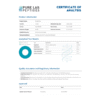
Reliable product identification requires appropriate documentation. Therefore, Pure Lab Peptides Supply provides access to its Certificate of Analysis (COA) page.
Available batch documentation may include analytical identification, reported purity, and other relevant testing information. However, researchers should consult the applicable batch record rather than assume that general reference specifications establish the characteristics of a specific vial.
In addition, confirm whether the documented material is reduced glutathione or oxidized glutathione before recording molecular specifications or comparing analytical results.
Discreet Delivery with Pure Lab Peptides Supply
Pure Lab Peptides Supply prioritizes discreet and secure order handling. Eligible shipments use odor-proof, tamper-resistant, non-branded packaging to help protect package privacy during transit.
In addition, tracking information is provided so customers can follow shipment progress. This approach supports a professional delivery experience while keeping external packaging simple and discreet.
Storage and Handling
Store lyophilized research materials according to the product label and applicable documentation. Protect the vial from unnecessary exposure to moisture, heat, and direct light.
Furthermore, follow appropriate laboratory handling procedures and consult the relevant product records before conducting analytical work. Do not assume a specific storage temperature, reconstitution method, or post-reconstitution stability period without supporting product information.
Frequently Asked Questions
What is glutathione?
Glutathione is a naturally occurring tripeptide composed of glutamic acid, cysteine, and glycine. Its reduced form is commonly abbreviated as GSH.
How much glutathione is supplied per vial?
Each vial is labeled as containing 600 mg of lyophilized research material.
What is the molecular structure of glutathione?
The commonly referenced reduced form has the structure L-γ-glutamyl-L-cysteinylglycine. It contains three amino acid residues and a distinctive gamma-peptide linkage.
What is the difference between GSH and GSSG?
GSH refers to reduced glutathione, while GSSG refers to oxidized glutathione. They represent different chemical states and have different molecular specifications.
Is glutathione a peptide?
Yes. Glutathione is a tripeptide because it contains three amino acid residues connected through peptide linkages.
Where can I find glutathione documentation?
Visit the Pure Lab Peptides Supply COA page to access available documentation. Refer to the applicable batch record for product-specific analytical information.
Order Glutathione 600 mg
Explore Glutathione 600 mg from Pure Lab Peptides Supply for laboratory research and analytical reference applications. The product is supplied as lyophilized powder in one vial with a labeled quantity of 600 mg.
For accurate product identification, review the available product information and applicable COA documentation before incorporating the material into research records or analytical workflows.