Description
Thymosin Alpha-1 5 mg | Pure Lab Peptides Supply
Thymosin Alpha-1 5 mg: Research Material
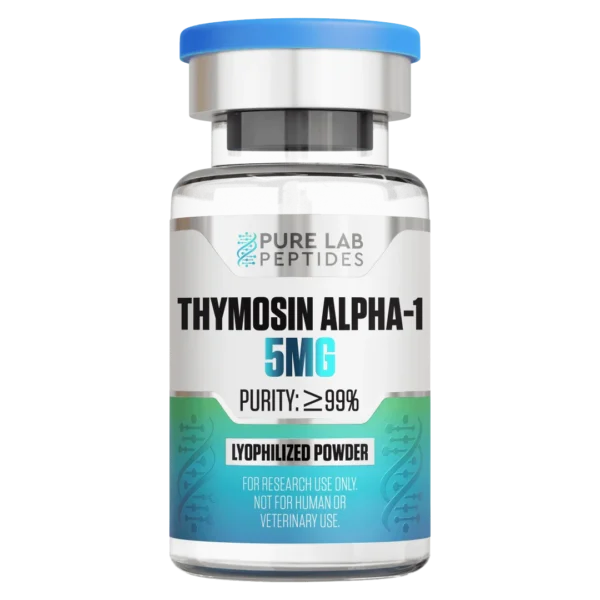
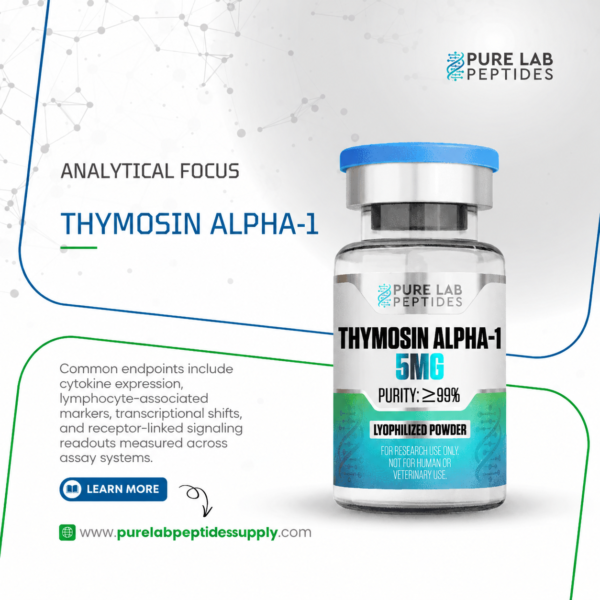
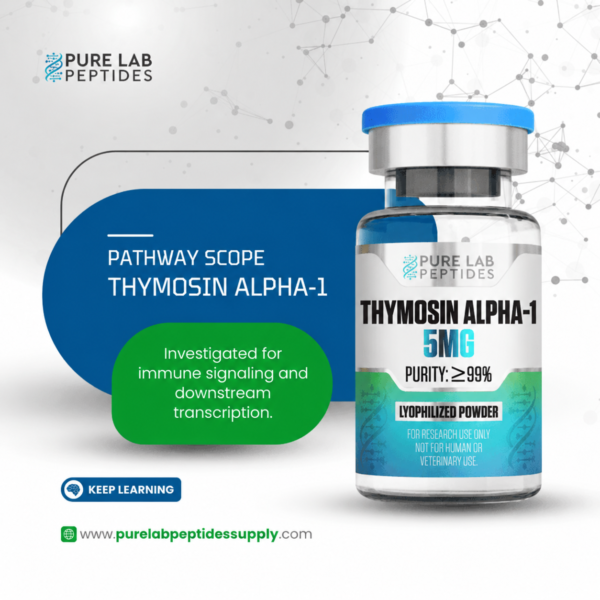
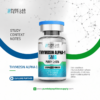
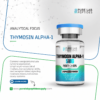
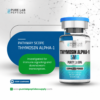
Buy Thymosin Alpha-1 5 mg from Pure Lab Peptides Supply, supplied as lyophilized powder in one boxed 3 mL vial for laboratory research.
Thymosin Alpha-1 is a defined 28-amino-acid peptide studied in immune-cell signaling and cellular response research. Its N-terminal acetylation and characteristic amino acid sequence help distinguish it from other thymosin-related materials. This listing represents the single named compound, not a combined thymosin preparation.
Product Overview
- Product name: Thymosin Alpha-1
- Labeled quantity: 5 mg
- Presentation: One boxed 3 mL vial
- Physical format: Lyophilized powder
- Compound class: Acetylated 28-amino-acid peptide
- Reference sequence: Ac-SDAAVDTSSEITTKDLKEKKEVVEEAEN
- N-terminal modification: Acetylation
- Product type: Single-compound listing
- Intended application: Laboratory research
- Documentation: Available product records and batch reports, where provided
The 5 mg label indicates the stated material quantity, whereas 3 mL describes the vial’s capacity. Therefore, vial capacity does not indicate a prepared liquid volume or solution concentration.
Choose the Material and Presentation
This 5 mg presentation provides a defined labeled quantity in one vial. A separate 10 mg presentation may suit a different laboratory material requirement; however, a larger labeled amount does not establish a higher solution concentration or a stronger cellular response.
Before comparing research materials, verify the complete compound name and sequence. Thymosin Alpha-1, thymosin beta-4, TB-500, and Thymogen are distinct materials. Likewise, findings from a mixed thymus extract cannot automatically establish the properties of an isolated peptide.
For accurate comparisons, review the supplied chemical form, sequence information, labeled quantity, and applicable product records. These details help researchers distinguish materials and maintain consistent experimental documentation.
Thymosin Alpha-1 in Dendritic-Cell Experiments
In a study by Romani and colleagues, published in 2004, researchers examined dendritic cells exposed to Aspergillus fumigatus. The study investigated how Thymosin Alpha-1 affected dendritic-cell function and inflammatory signaling in this defined experimental model.
The researchers reported that Thymosin Alpha-1 promoted functional maturation and interleukin-12 production in the examined cells. They also investigated p38 MAP kinase and NF-κB signaling, including the involvement of MyD88-dependent Toll-like receptor pathways.
These results relate to a specific cell type, experimental stimulus, and set of laboratory conditions. Consequently, they do not establish that the peptide increases every immune response or produces the same outcome across different biological models.
Cell maturation, cytokine production, and downstream signaling also represent separate experimental readouts. When evaluating a research protocol, identify the measured endpoint and the controls supporting its interpretation. In addition, distinguish the study’s findings from the analytical characteristics of a commercial product.
The published experiment provides scientific context for Thymosin Alpha-1 research. However, it does not certify the biological activity, identity, or purity of a particular commercial lot.
Product Records and Batch Reports
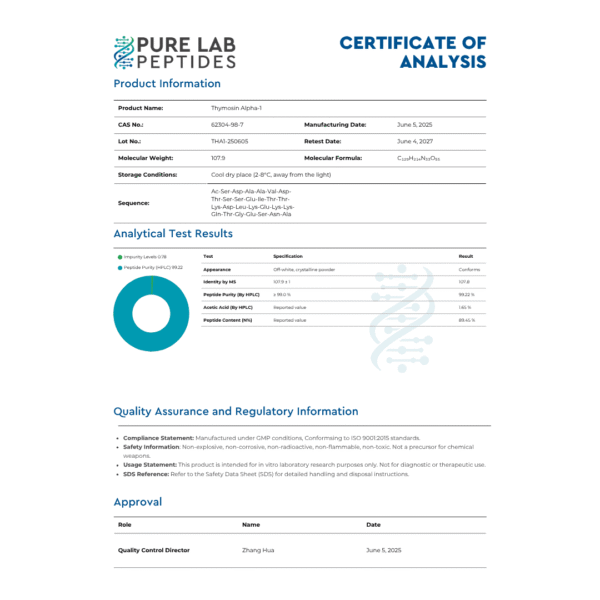
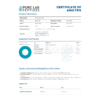
Review the available COA & Documents for relevant product files and batch documentation.
When checking a certificate of analysis (COA), first match the report to the product name, presentation, and lot number. Then assess each analytical result separately because identity, purity, and measured content answer different questions.
- Identity: Analytical evidence used to assess whether the tested material matches the stated compound.
- HPLC purity: The chromatographic purity result obtained using the reported analytical method.
- Measured content: The quantity determined through the specified analytical procedure.
- Sequence information: Details that help establish the intended peptide structure and chemical modifications.
For example, an HPLC purity percentage does not independently confirm the total amount of material in a vial. Similarly, analytical purity does not demonstrate a functional response in a cell assay.
If your research requires a particular salt form, sequence confirmation, or measured-content result, verify that the available documentation addresses that requirement. Request missing information before relying on an unverified specification.
Additional Product Information
| Specification | Details |
|---|---|
| CAS number | 62304-98-7 |
| Reference sequence | Ac-Ser-Asp-Ala-Ala-Val-Asp-Thr-Ser-Ser-Glu-Ile-Thr-Thr-Lys-Asp-Leu-Lys-Glu-Lys-Lys-Glu-Val-Val-Glu-Glu-Ala-Glu-Asn |
| Reference molecular formula | C129H215N33O55 for the free peptide |
| Reference molecular weight | Approximately 3,108.3 g/mol for the free peptide |
| Listed purity specification | ≥99%; verify against the applicable batch report |
| Synthesis method | Solid-phase synthesis, as listed |
| Appearance | White lyophilized powder, as listed |
| Physical format | Lyophilized powder |
| Listed solubility | Water or 1% acetic acid; verify against product-specific documentation |
| Listed storage | −20°C; confirm the applicable product instructions |
| Shipping conditions | Ambient-temperature shipping, as listed |
| Manufacturing information | Verify cGMP-related claims against applicable quality documentation |
| Safety documentation | Refer to the applicable safety data sheet (SDS/MSDS) |
The molecular formula and molecular weight above describe the reference free peptide. However, the supplied chemical form may affect the applicable molecular specifications. Therefore, confirm whether the product contains the free peptide or a salt form before using these values in calculations or analytical records.
The stated purity of ≥99% represents the listed specification, not a verified result for every batch. Likewise, solubility, storage, shipping, and manufacturing statements require confirmation through current product-specific documentation.
Thymosin Alpha-1 5 mg: Storage and Handling
Thymosin Alpha-1 5 mg is supplied as lyophilized powder in one boxed 3 mL vial. For reliable laboratory recordkeeping, retain the product label and relevant batch documents together.
The supplied product information lists storage at −20°C and a stability period of up to 24 months. However, confirm both details against the applicable documentation for the supplied material before relying on them. The chemical form, packaging, and documented storage conditions may affect the relevance of a general specification.
Similarly, published cell experiments do not independently establish the shelf life or storage requirements of a commercial vial. Use the product-specific instructions for any handling requirements that your laboratory records need to capture.
Order Thymosin Alpha-1 5 mg Research Material
Thymosin Alpha-1 5 mg offers a clearly labeled, single-compound presentation for laboratories examining peptide identity and immune-cell signaling. Before ordering, compare the labeled quantity, reference sequence, vial format, and available batch documentation.
Visit Pure Lab Peptides Supply to review the product catalog and available documentation.
Research-use notice: This product is intended for laboratory research only. It is not presented as a medicine, dietary supplement, or product for human or veterinary use.