Description
NAD+ 1000 mg | Pure Lab Peptides Supply
NAD+ 1000 mg: research material
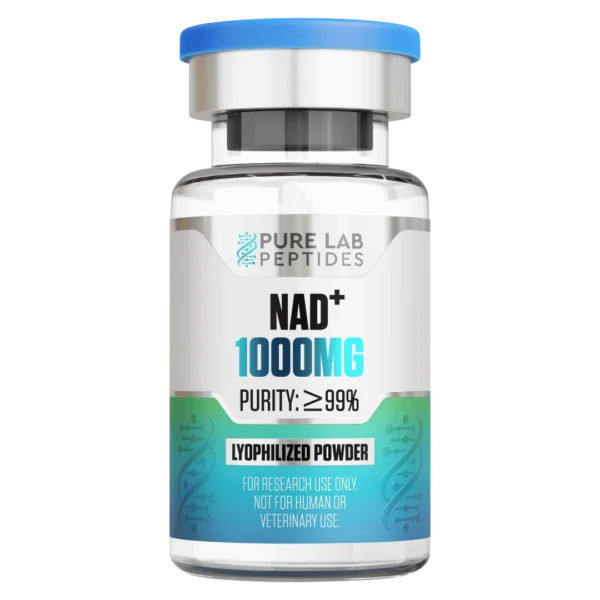
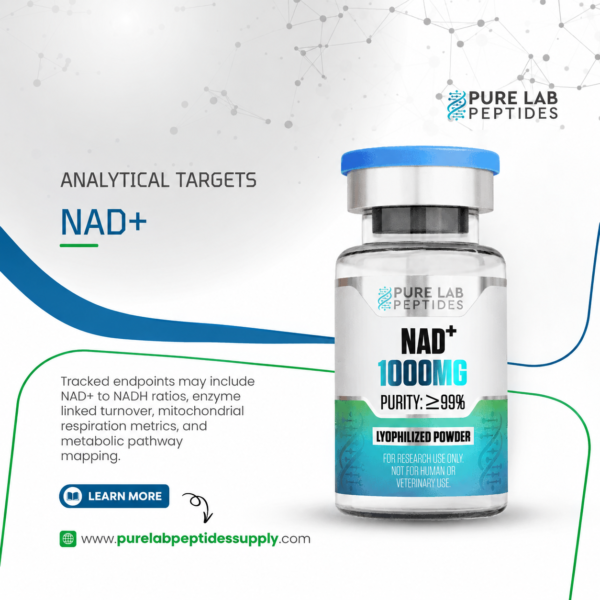
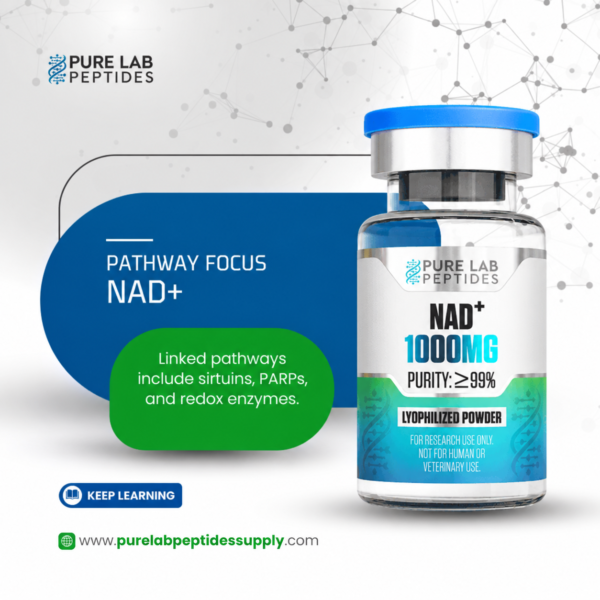
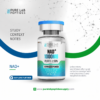
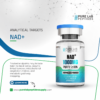
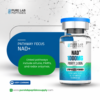
Buy NAD+ 1000 mg from Pure Lab Peptides Supply for laboratory research. This presentation contains lyophilized powder in one boxed 3 mL vial.
Nicotinamide adenine dinucleotide, commonly known as NAD+, is an oxidized nucleotide cofactor involved in cellular redox reactions and enzyme activity. Unlike peptides, NAD+ is not a chain of amino acids. Therefore, researchers should assess its chemical identity, material quantity, and batch documentation using specifications appropriate for a nucleotide cofactor.
Product Overview
- Product Name: NAD+ (Nicotinamide Adenine Dinucleotide)
- Labeled Quantity: 1000 mg
- Presentation: One boxed 3 mL vial
- Physical Format: Lyophilized powder
- Compound Class: Nucleotide cofactor
- Sequence: Not applicable; NAD+ is not a peptide
- Product Type: Single-compound research material
- Intended Application: In-vitro assays, compound characterization, and analytical method development
- Documentation: Product specifications and available batch records
Choose the material and presentation
The 1000 mg presentation provides the labeled material quantity for comparison with your research requirements. A 500 mg presentation is also available. However, the labeled mass alone does not establish purity, solution concentration, or suitability for a particular analytical method.
The chemical form also matters. NAD+ represents the oxidized form of nicotinamide adenine dinucleotide, whereas NADH represents its reduced counterpart. NADP+ and NADPH are related cofactors that contain an additional phosphate group. Similarly, compounds used as NAD+ precursors are distinct materials rather than interchangeable names for NAD+.
Before selecting a material, match the exact cofactor, chemical form, and documented specifications to the assay or analytical procedure.
NAD+ in cofactor-dependent enzyme research
NAD+ participates in many enzyme reactions, including reactions involving sirtuins such as SIRT1. Researchers therefore study NAD+-dependent systems to investigate enzyme activity, regulation, and molecular interactions.
Davenport and colleagues examined the structure and regulation of the human SIRT1 catalytic domain. Their structural work described open and closed conformations, including a closed complex containing ADP-ribose, an NAD+ hydrolysis product, and a substrate-mimicking peptide. Their biochemical experiments also identified an inhibitory role for a C-terminal regulatory segment.
These findings help explain aspects of SIRT1 organization and regulation. However, they do not establish the cellular uptake, biological performance, or suitability of a particular commercial NAD+ preparation. Those questions require evidence appropriate to the material, experimental system, and research endpoint.
Product records and batch reports
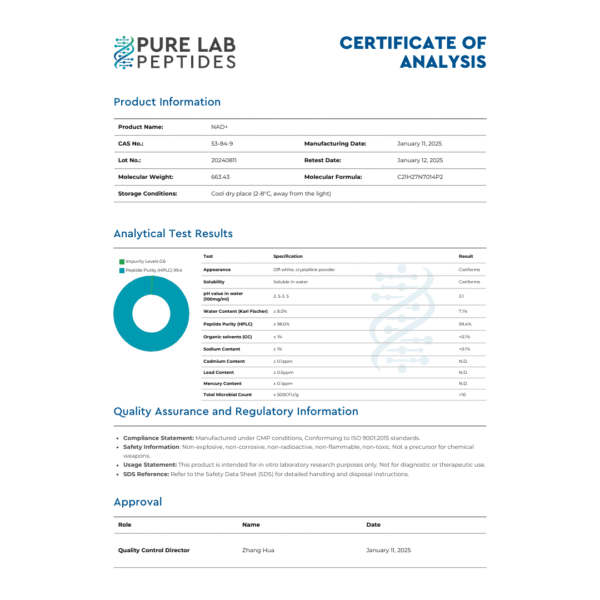
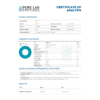
Review the available COA & Documents before assessing this material for laboratory use. Match the product name, labeled quantity, batch identifier, and chemical form against the records supplied for the relevant lot.
In addition, interpret each analytical result according to what it measures. For example, a reported purity percentage does not necessarily establish the identity of every component, the total NAD+ content, or performance in a functional assay. Consequently, check the test method and report details before drawing conclusions about material quality.
Because NAD+ is a nucleotide rather than a peptide, peptide-specific fields such as amino-acid sequence and solid-phase peptide synthesis do not apply in the usual way. Confirm the actual manufacturing method, solubility, storage conditions, and stability period using the documentation for this specific product.
Additional Product Information
| Specification | Details |
|---|---|
| CAS Number | 53-84-9 |
| Labeled Quantity | 1000 mg |
| Purity | ≥99%, as stated in the supplied specification; verify against the applicable batch report |
| Sequence | Not applicable; NAD+ is not a peptide |
| Molecular Formula | C21H27N7O14P2, for the stated chemical form |
| Molecular Weight | 663.43 g/mol, for the stated chemical form |
| Research Applications | In-vitro assay research, compound characterization, and analytical method development |
| Manufacturing Method | Confirm the applicable method in the product documentation; solid-phase peptide synthesis is not an appropriate generic description for NAD+ |
| Solubility | The supplied specification states solubility in water or 1% acetic acid; verify the solvent compatibility and conditions for this material |
| Stability and Storage | The supplied specification states up to 24 months at −20°C; confirm the duration and storage conditions in the applicable stability records |
| Appearance | Lyophilized powder; confirm the batch-specific description |
| Shipping Conditions | The supplied specification states ambient-temperature shipping; follow the product-specific handling instructions upon receipt |
| Manufacturing Compliance | The supplied specification states that manufacturing takes place in a facility adhering to cGMP guidelines; verify the supporting documentation |
| Safety Information | Refer to the supplied MSDS or applicable safety data sheet |
Specification note: The formula and molecular weight above correspond to the stated NAD+ chemical form. If the supplied material uses a different salt or formulation, verify the applicable formula, molecular weight, and labeled-content basis in the product records. Likewise, treat purity, stability, solubility, manufacturing, and shipping details as supplier-provided specifications until the relevant documentation confirms them.
Ordering and documentation
Choose NAD+ 1000 mg when the labeled quantity and documented chemical form align with your laboratory requirements. Before proceeding, review the available batch records and confirm the relevant analytical specifications.
Pure Lab Peptides Supply presents this product as research material, not as an approved medicine or a recommendation for human or veterinary use.
Research-use notice
This material is intended for legitimate laboratory research and analytical purposes only. It is not intended for human consumption, self-administration, diagnosis, treatment, or prevention of disease. Follow applicable laboratory procedures, safety guidance, and institutional requirements.