

Description
Tri-Heal 45 mg | Pure Lab Peptides Supply
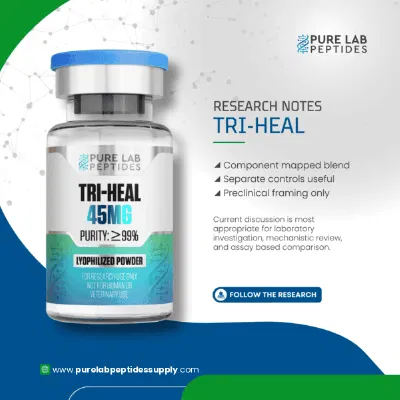
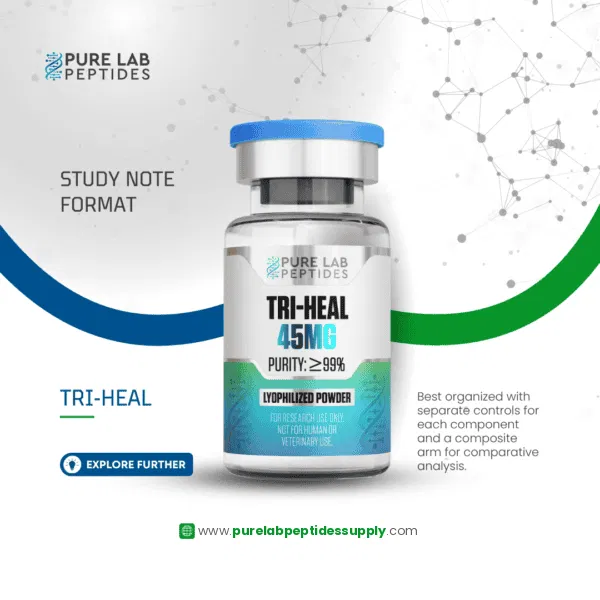
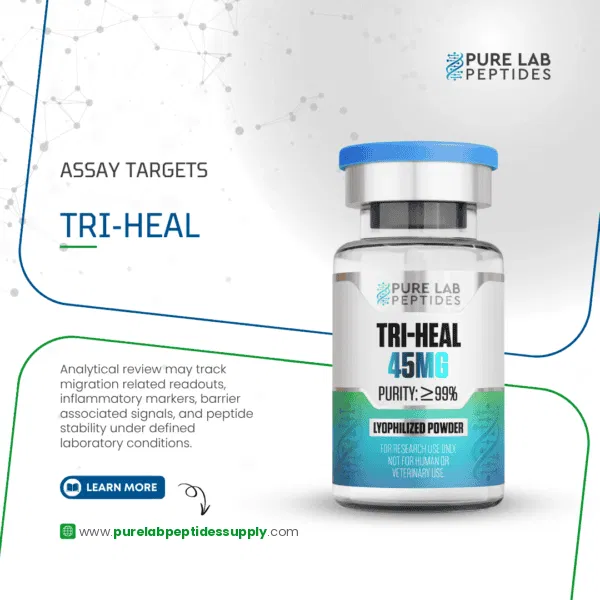
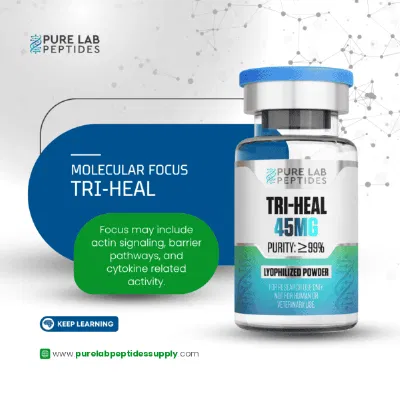
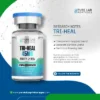
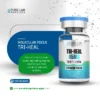
Buy Tri-Heal from Pure Lab Peptides Supply, supplied as lyophilized powder in one vial containing 45 mg of combined labeled research material. This three-peptide formulation brings together TB-500, BPC-157, and KPV for laboratory research and analytical reference.
Each peptide has a distinct molecular structure and research background. For example, researchers investigate TB-500 in connection with actin regulation and cellular movement. Meanwhile, BPC-157 appears in experimental studies involving tissue biology and cellular processes. In addition, researchers examine KPV in relation to inflammatory signaling.
Together, these three components provide a multi-peptide formulation for investigating different biochemical pathways. The blend contains 25 mg of TB-500, 10 mg of BPC-157, and 10 mg of KPV. Therefore, the total labeled quantity equals 45 mg per vial, representing the combined dry material mass.
Product Overview
Pure Lab Peptides Supply offers Tri-Heal in a 45 mg lyophilized presentation. Its clearly identified composition supports product identification, laboratory inventory management, and analytical documentation.
- Product: Tri-Heal
- Labeled quantity: 45 mg total per vial
- Presentation: One vial
- Physical format: Lyophilized powder
- Compound class: Multi-peptide blend
- Number of components: Three
- Research classification: Peptide and biochemical research material
- Documentation: Product-specific records and applicable COA documentation
Tri-Heal Composition
| Peptide Component | Quantity per Vial |
|---|---|
| TB-500 | 25 mg |
| BPC-157 | 10 mg |
| KPV | 10 mg |
| Total per vial | 45 mg |
The quantities above identify the labeled mass of each ingredient. Consequently, the 45 mg total represents the combined amount of all three peptides, not the quantity of each individual component.
Product Information
Tri-Heal combines three peptides with different molecular characteristics and research applications. Furthermore, each ingredient contributes a distinct area of scientific interest.
TB-500 – 25 mg
TB-500 is commonly associated with thymosin beta-4-related research. Researchers examine thymosin beta-4 structures in connection with actin regulation, cellular movement, and tissue biology. In particular, these studies explore how cells interact with their surrounding biological environments.
However, the TB-500 name can refer to different product specifications. For this reason, researchers should confirm the exact sequence and chemical form through the applicable product documentation.
BPC-157 – 10 mg
BPC-157 is a synthetic peptide commonly described as a 15-amino-acid sequence. Researchers investigate its molecular characteristics and its relationship to cellular signaling and tissue-related biological models.
Additionally, its distinct amino-acid sequence makes it an identifiable component within multi-peptide research formulations.
KPV – 10 mg
KPV is a short tripeptide consisting of lysine, proline, and valine. Researchers study its relationship to inflammatory signaling and related cellular pathways.
Moreover, its compact molecular structure distinguishes it from TB-500 and BPC-157. This difference also gives researchers three distinct peptide components to examine within the same formulation.
Key Benefits of the Tri-Heal Formulation
Tri-Heal combines three research peptides associated with different areas of cellular and biochemical investigation. As a result, the formulation offers several useful characteristics for laboratory research.
- Three-peptide formulation: Combines TB-500, BPC-157, and KPV in one clearly identified blend.
- Tissue biology research: Includes components studied in experimental models involving cellular movement and tissue-related processes.
- Cellular signaling research: Provides distinct peptide structures for investigating different cellular pathways.
- Inflammatory pathway research: Includes KPV, which researchers examine in connection with inflammatory signaling.
- Sports-science research relevance: Connects with research areas involving exercise-related tissue biology and cellular responses.
- Clearly defined composition: Identifies the exact labeled quantity of each component for easier product comparison.
- Convenient research identification: Brings three individually identified ingredients together in one 45 mg presentation.
Furthermore, the formulation allows researchers to examine different peptide structures within one combined research material. Nevertheless, these research characteristics do not establish clinical benefits, therapeutic effectiveness, or improved athletic performance.
Sports and Athletic Research Context
Tri-Heal has research relevance to several areas that overlap with sports science and exercise biology. In particular, researchers investigate cellular movement, tissue responses, and inflammatory signaling when studying biological responses to physical stress.
TB-500 and sports-science research
Researchers examine thymosin beta-4-related structures in connection with actin regulation and cellular movement. These subjects also appear in broader investigations of tissue biology and exercise-related cellular responses.
BPC-157 and sports-science research
Experimental BPC-157 research explores cellular signaling and tissue-related biological models. Consequently, researchers may examine these pathways when investigating biological responses to physical stress and tissue environments.
KPV and sports-science research
Researchers investigate KPV in connection with inflammatory signaling. This area also overlaps with exercise biology because physical activity can involve complex inflammatory and cellular responses.
Together, these research topics provide scientific context for the three components in Tri-Heal. However, the blend has not been established as a proven sports recovery or performance product. Current evidence does not justify claims that it improves muscle growth, strength, endurance, injury recovery, or athletic performance.
Tri-Heal is presented as research material, not as an approved sports supplement or treatment for sports injuries.
Molecular Characteristics
Tri-Heal is a three-component peptide blend rather than a single molecular compound. Therefore, the complete formulation does not have one universal molecular formula, molecular weight, CAS number, or amino-acid sequence.
The following reference information describes commonly reported component identities:
| Component | Reference Sequence or Description | CAS Reference |
|---|---|---|
| TB-500 | Thymosin beta-4-related peptide; exact product form requires confirmation | 77591-33-4 is commonly associated with full-length thymosin beta-4 |
| BPC-157 | GEPPPGKPADDAGLV | 137525-51-0 |
| KPV | Lys-Pro-Val | 67727-97-3 |
Importantly, the TB-500 designation can refer to different product specifications. Full-length thymosin beta-4 and shorter products marketed as TB-500 are not automatically chemically identical.
Similarly, researchers should evaluate BPC-157 and KPV through their individual molecular specifications. For accurate identification, consult the applicable product documentation for the exact structures, chemical forms, and analytical results.
Why Choose the Tri-Heal 45 mg Presentation?
The Tri-Heal 45 mg presentation provides three separately identified peptide quantities in one vial. As a result, researchers can review the formulation without confusing the combined quantity with the amount of an individual ingredient.
The blend also provides a clearly defined mass distribution:
- TB-500: Approximately 55.6% of the total.
- BPC-157: Approximately 22.2% of the total.
- KPV: Approximately 22.2% of the total.
These percentages describe the labeled mass distribution only. They do not indicate relative purity, potency, biological activity, or effectiveness.
Furthermore, the lyophilized format provides a dry presentation for storage under the conditions specified in the applicable product documentation. The clearly stated ingredient quantities also support straightforward inventory organization and product identification.
Quality Documentation and COA
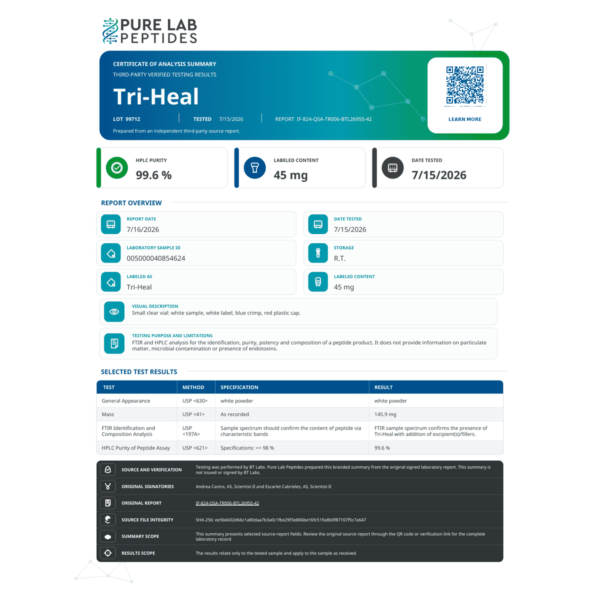
Pure Lab Peptides Supply provides access to available Certificates of Analysis and related product documentation through its dedicated COA page.
For a multi-peptide formulation, component identification and batch documentation are particularly important. Available records may contain analytical identification, reported purity, and other batch-specific quality measurements.
Therefore, researchers should match the applicable documentation to the relevant product and batch. A general product description does not independently establish the analytical results of a particular batch.
Discreet Delivery with Pure Lab Peptides Supply
Pure Lab Peptides Supply prioritizes secure handling and customer privacy throughout the shipping process.
Eligible shipments use odor-proof, tamper-resistant, non-branded packaging. In addition, tracking information helps customers monitor delivery progress while maintaining a discreet purchasing experience.
This approach supports shipment privacy from dispatch through delivery.
Storage and Handling
Store Tri-Heal according to the conditions stated in the applicable product documentation. Since the formulation contains three different peptide components, researchers should follow the specific storage guidance supplied for the blend.
Keep the vial properly identified and protect it from unsuitable environmental conditions. Additionally, maintain appropriate laboratory records for material identification, storage, and handling.
Always consult the product-specific documentation before selecting any preparation or analytical procedure.
Frequently Asked Questions
What is Tri-Heal?
Tri-Heal is a three-peptide research blend containing TB-500, BPC-157, and KPV. The formulation contains 45 mg of combined labeled material per vial.
What are the ingredients in Tri-Heal 45 mg?
The formulation contains 25 mg of TB-500, 10 mg of BPC-157, and 10 mg of KPV. Together, these quantities account for the complete 45 mg blend.
What are the key benefits of Tri-Heal?
Tri-Heal combines peptides that researchers study in connection with cellular movement, tissue biology, and inflammatory signaling. Consequently, the formulation has research relevance across several biochemical areas. However, these research associations do not establish proven clinical benefits.
Is Tri-Heal relevant to sports research?
Yes. Researchers investigate its individual components in areas that overlap with exercise biology, including cellular responses, tissue-related pathways, and inflammatory signaling. Nevertheless, Tri-Heal has not been established as a proven athletic recovery or performance product.
Does Tri-Heal improve muscle recovery or athletic performance?
There is insufficient established clinical evidence to claim that Tri-Heal improves muscle recovery, strength, endurance, or athletic performance. Researchers should distinguish experimental findings from proven human outcomes.
Is Tri-Heal a single peptide?
No. Tri-Heal contains three distinct peptides. Therefore, the complete blend does not have one universal molecular formula, molecular weight, or amino-acid sequence.
Why does TB-500 have a higher quantity in the blend?
TB-500 accounts for 25 mg of the 45 mg formulation, while BPC-157 and KPV each account for 10 mg. These quantities describe the labeled mass distribution, not the relative biological activity or effectiveness of each peptide.
Does the product include a Certificate of Analysis?
Available documentation can be accessed through the Pure Lab Peptides Supply COA page. Researchers should review the applicable record for batch-specific information.
Is Tri-Heal supplied as a liquid?
No. This listing identifies a lyophilized powder presentation containing 45 mg of combined labeled material per vial.
Order Tri-Heal 45 mg
Explore the Tri-Heal 45 mg presentation from Pure Lab Peptides Supply. Review the ingredient breakdown and available COA documentation to support accurate product identification and laboratory recordkeeping.