admin

admin

Analytical Method Validation: What a Peptide Test Can Support
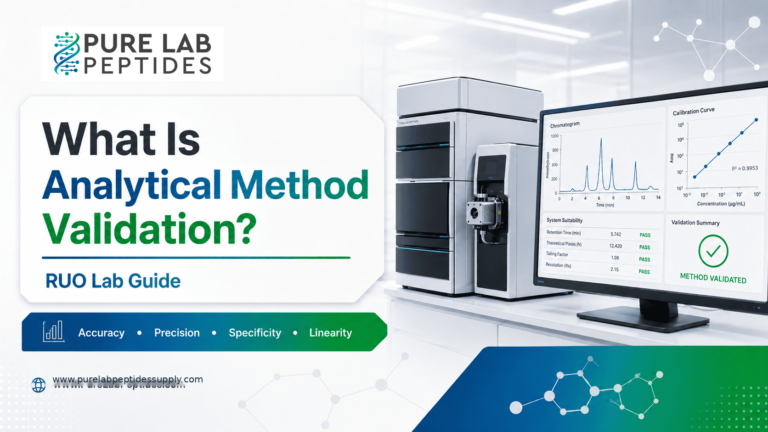
TL;DR · The short version Analytical method validation asks whether a procedure supports an intended measurement. Identity, purity and content have different evidence needs. System suitability checks a routine run; it doesn’t replace the broader validation work. A report names…
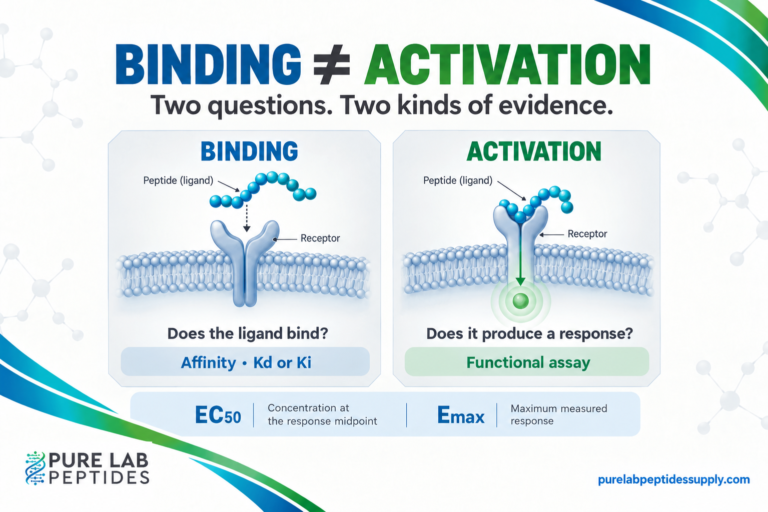
Peptide Agonist: What Receptor Activation Really Shows

TL;DR · The short version A peptide agonist produces receptor activity in a tested system. Binding alone doesn’t establish it. Look for the receptor, response, concentration-response curve and reference compound, then keep that assay context with the finding. A clear…

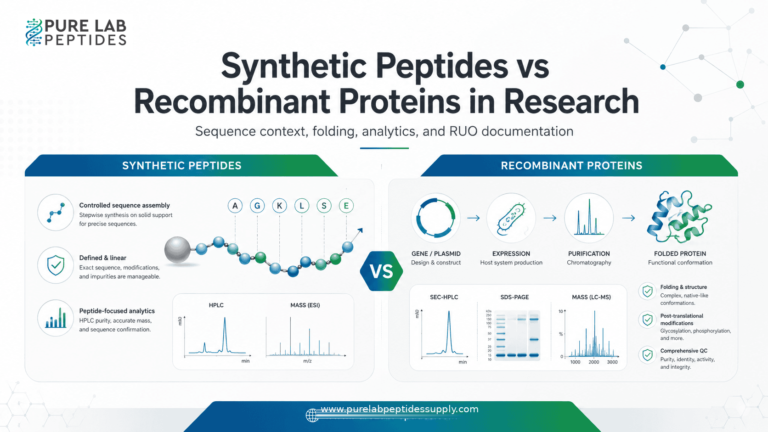
Synthetic Peptides vs Recombinant Proteins: Choosing for an Assay

Synthetic Peptides vs Recombinant Proteins: Choosing for an Assay

TL;DR · The short version Synthetic peptides vs recombinant proteins starts with what the assay needs. Chemical synthesis can provide a defined peptide sequence or modification; recombinant expression can provide a domain or full-length construct. Check the actual specification, folding,…

Peptide Analog: Identify the Change Before the Claim

Peptide Analog: Identify the Change Before the Claim

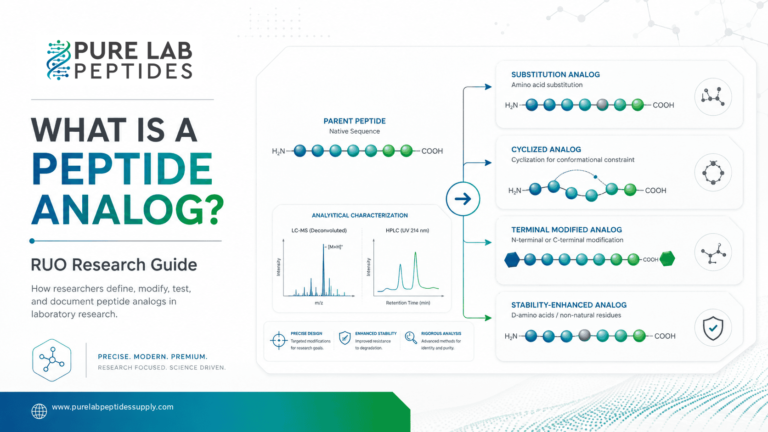
TL;DR · The short version A peptide analog differs from a reference peptide in a defined way: a residue, end group, attachment or backbone may change. The relationship doesn’t establish better potency, stability or a matching biological response. Locate the…

Peptide Fragment: Reading the Parent Sequence and Range

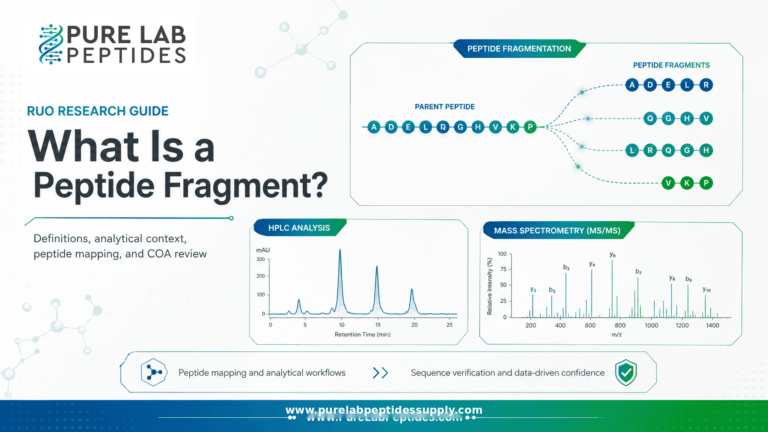
TL;DR · The short version A peptide fragment selects a shorter part of a parent sequence. Its identity includes the parent, residue range and end chemistry; its activity needs separate evidence. A fragment ion produced during mass spectrometry is also…

Preclinical vs Clinical Research: How to Read Peptide Evidence

purelabpeptidessupply

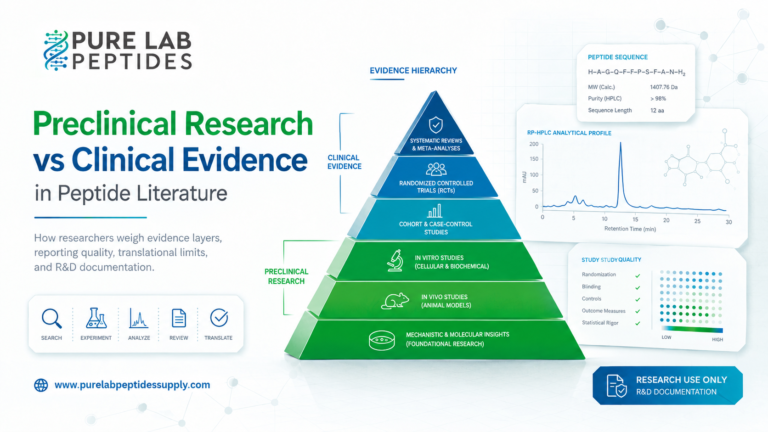
TL;DR: Preclinical vs clinical research distinguishes settings and study designs. Cell and animal experiments explore questions before or alongside human research; studies in people still depend on their population, design and outcomes. None certifies the contents of a retail research vial.…

Short Peptide Bioregulators: Sequences, Studies and Evidence

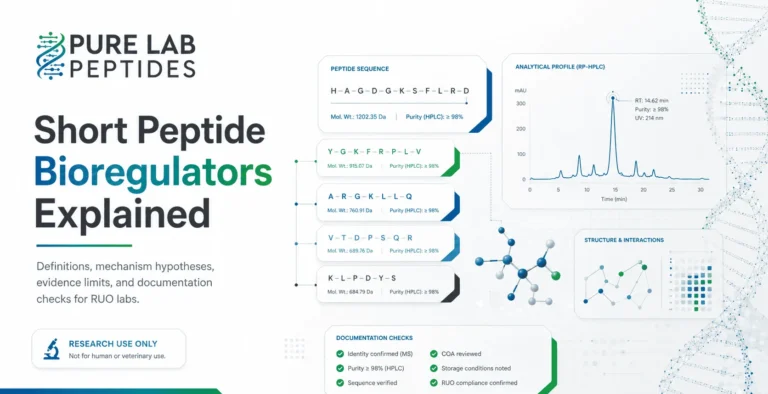
TL;DR · The short version Short peptide bioregulators include distinct sequences such as KE, AED, KED and AEDG studied for cellular regulation. Start with the molecule and cell model, then the result. Docking, gene expression and protein markers supply different…

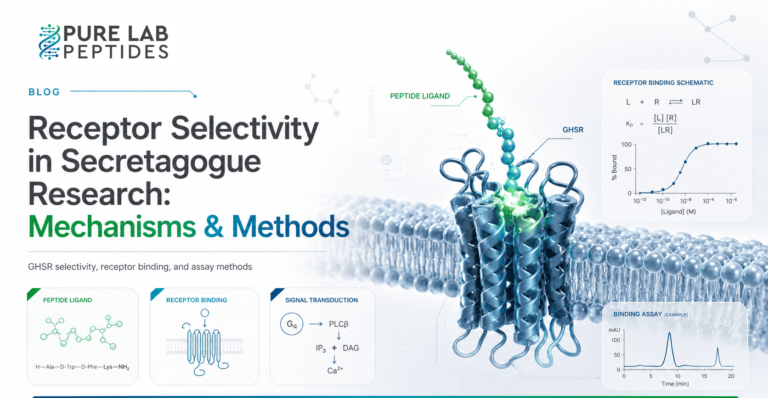
Receptor Selectivity: Comparing Peptide Assay Evidence

TL;DR · The short version Receptor selectivity describes preference among tested receptors. Compare binding with binding, or the same functional endpoint under comparable conditions. The result belongs to that panel and assay; it doesn’t prove exclusive action at one receptor…

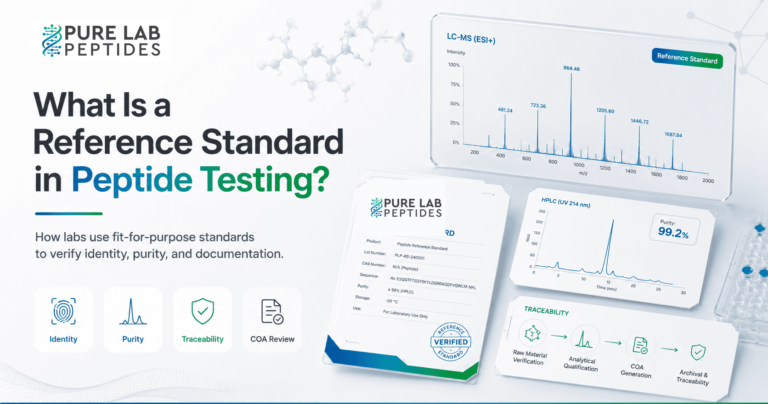
Peptide Reference Standards: Choosing the Right Comparison

Peptide reference standards serve defined measurements. Identity comparison, content calibration and chromatographic performance checks don’t require identical evidence.

TL;DR · The short version Peptide reference standards serve defined measurements. Identity comparison, content calibration and chromatographic performance checks don’t require identical evidence. Review intended use, assigned value, lot documents and handling before choosing the standard. The sequence may match…

0
0
Your Cart
Empty CartYour cart is emptyReturn to Shop
Secure Checkout
Fast Shipping
Easy Returns